A combined Egypt and Morocco trip works in 14 days: 6–7 nights Egypt (Cairo + Nile cruise) and 7 nights Morocco (Marrakech + Fez + Sahara + Casablanca). No direct flights between the two — connect via a European hub (Frankfurt, Paris, Istanbul) or fly Cairo → Casablanca via Doha (Qatar Airways). Sequence Egypt first, then Morocco. Both countries share Arab-Islamic culture but feel entirely different — Egypt is monumental and ancient, Morocco is intricate and mercantile.
- Ideal duration: 14 days (6–7 Egypt + 7 Morocco)
- Sequence: Egypt first, then Morocco
- Flight: no direct — connect via Istanbul, Doha or European hub, 8–12 hours total
- Morocco visa: free on arrival for most Western passports (90 days)
- Morocco highlights: Marrakech medina, Fez, Sahara Merzouga camp, Casablanca
- Two very different countries: pharaonic monuments vs Berber-Arab-Islamic medinas
Why combine Egypt and Morocco
Both are North African, both are Arab-Islamic, both have world-class monuments — and they couldn’t feel more different. Egypt shows you 5,000-year-old pharaonic monumentalism, on a river, in a hot dry climate. Morocco shows you intricate Berber-Arab-Islamic medieval cities, mountain valleys, and Sahara sunsets. Seeing both in one trip gives you an unusually complete picture of what “North Africa” actually means.
The catch: they’re not close. Cairo to Casablanca is 3,700 km — further than New York to LA. There’s no direct flight; every route involves a connection through Doha, Istanbul or Europe.
The 14-day itinerary
Egypt (Days 1–7)
- Days 1–3: Cairo — Pyramids, Grand Egyptian Museum, Coptic + Islamic Cairo
- Day 3: Fly to Luxor evening, embark Nile cruise
- Days 4–6: Nile cruise Luxor → Aswan (Karnak, West Bank, Edfu, Kom Ombo, Philae)
- Day 7: Aswan disembark, fly Aswan → Cairo → Casablanca (long day)
Morocco (Days 8–14)
- Day 8: Arrive Casablanca late Day 7 or early Day 8, transfer to Marrakech (train, 3h)
- Day 9: Marrakech medina — Jemaa el-Fnaa, Bahia Palace, Majorelle Garden
- Day 10: Marrakech to Merzouga (Sahara) via High Atlas Mountains + Ait Ben Haddou (long drive, spectacular)
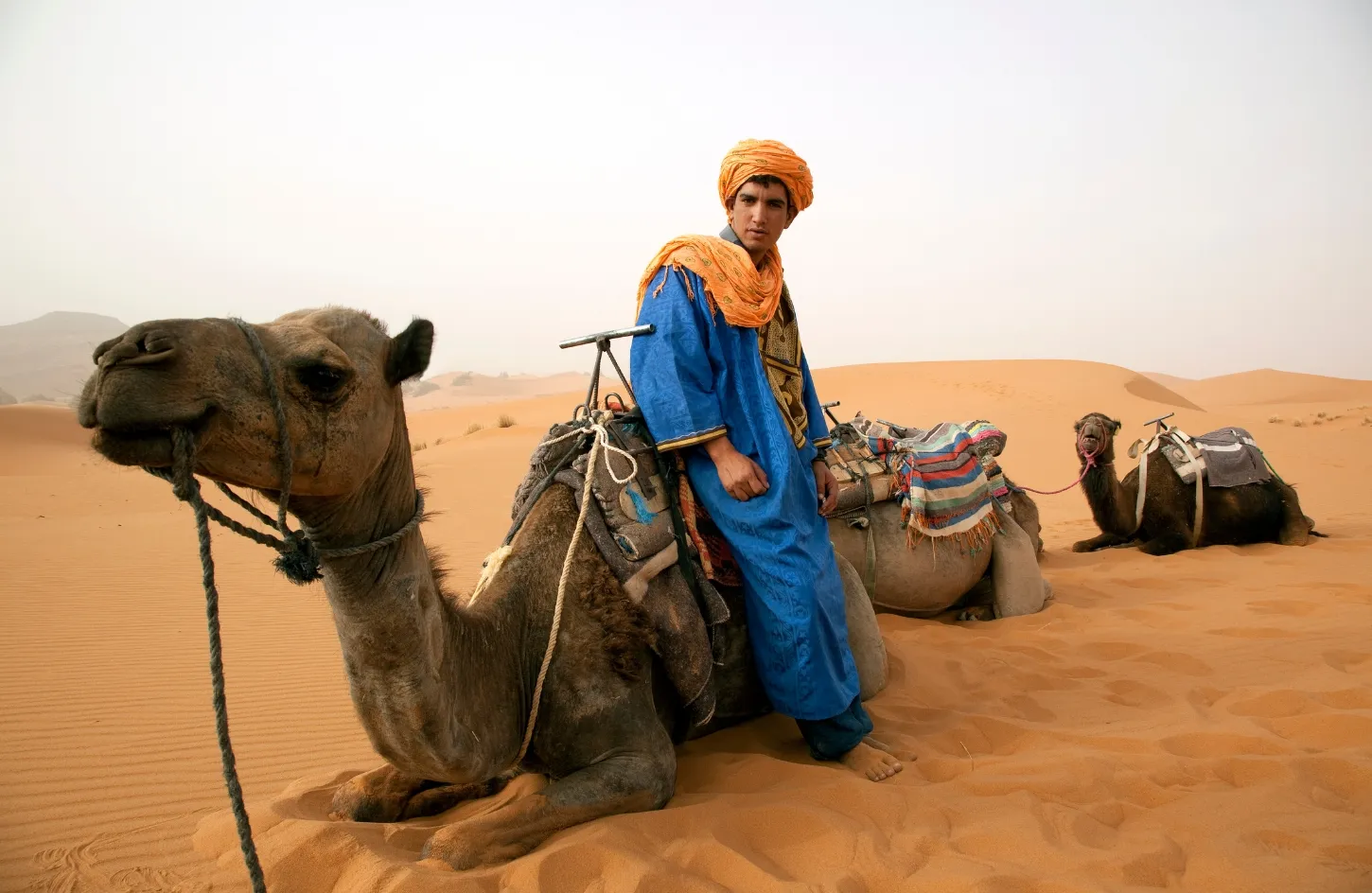
- Day 11: Sunrise camel ride in Erg Chebbi dunes, drive to Fez via Middle Atlas
- Day 12: Fez medina (the world’s largest car-free urban zone) — tanneries, madrasas, souks
- Day 13: Fez to Casablanca (train, 3h), Hassan II Mosque tour, farewell dinner
- Day 14: Casablanca morning free, evening departure
Egypt first — the pattern holds
Same reasoning as Egypt+Jordan and Egypt+Dubai. Egypt is more logistics-intensive; do it first when you have full energy. Morocco is the more relaxed segment (once you’re in each city), though the driving between cities is long.
The flight problem
There’s no direct Cairo → Casablanca route. Options:
| Route | Total time | Airlines |
|---|---|---|
| Cairo → Doha → Casablanca | ~11 hours | Qatar Airways |
| Cairo → Istanbul → Casablanca | ~9 hours | Turkish Airlines |
| Cairo → Frankfurt → Casablanca | ~10 hours | Lufthansa |
| Cairo → Paris → Casablanca | ~10 hours | Air France, EgyptAir codeshare |
Book this as one ticket (not two separate) so lost-connection protection applies. Expect $400–700 per person one-way.
Best months for the combined trip
Morocco and Egypt overlap in season but Morocco extends more comfortably into spring. Best window for both: March to early May and October to mid-November. Morocco winter (December-February) is genuinely cold in Fez and the Atlas Mountains (below freezing in Merzouga desert nights); Egypt winter is fine. Morocco summer (June-August) is uncomfortable in Marrakech (40°C+); Egypt summer is worse. April or October is our recommendation.
Budget breakdown
| Segment | Cost per person twin-share |
|---|---|
| Egypt 6 nights (4★) | $1,200–1,600 |
| Morocco 7 nights (4★ riads + Sahara camp) | $1,400–1,900 |
| Cairo → Casablanca flight | $400–700 |
| Egypt + Morocco visas | $25 + $0 |
| Tips (whole trip) | $150–200 |
| Total (excl. int’l home flights) | $3,175–4,400 |
Morocco is a very good value destination — hotels and food are noticeably cheaper than Egypt for equivalent quality.
What Egypt and Morocco share
Arabic language (though the Moroccan dialect Darija is barely intelligible to Egyptians), Sunni Islam, historic medinas (Cairo’s Islamic quarter has real echoes of Fez’s), mint tea culture, souk-bargaining tradition, and Mediterranean-desert climate patterns. Traveling the two back-to-back highlights both the shared foundation and the very different cultural expressions built on it.
What they don’t share
Everything visual. Egyptian monuments are massive-scale stone; Moroccan medinas are intricate small-scale wood-tile-and-plaster. Egyptian religious geography is Pharaonic-Christian-Islamic layered; Morocco is essentially post-8th-century Islamic. Egypt is a river; Morocco is mountains, desert and Atlantic coast. The contrast is the point of the trip.

Frequently asked questions
Is this trip worth the long flights?
Yes for travelers specifically interested in comparative North African culture, or with only one Middle East / North Africa trip in mind and wanting to see both landmark countries.
Can I go the other direction (Morocco first)?
Yes if your international flights favor it. Both directions work.
What about combining with Spain?
Very common — Casablanca to Madrid or Barcelona is a 2h direct flight, and many travelers do Egypt + Morocco + Spain as a 3-week North Africa + Mediterranean trip. We handle the Egypt segment; Morocco and Spain via specialist local operators.
Do I need a specific Morocco itinerary or can I wing it?
Book at minimum the flights, transfers between cities, and the Sahara camp night. Marrakech and Fez can be explored independently on-arrival, but the desert logistics are much better pre-arranged.
Is Morocco safe?
Yes — one of North Africa’s safest destinations for tourists. The hassle level in Marrakech medina is higher than Cairo (persistent vendors, aggressive photographers) — a firm “la shukran” handles most of it. Solo female travelers can and do visit routinely.
Ready to start planning?
Every itinerary we run is private and every departure is confirmed for your exact dates. Tell us what you have in mind and we’ll come back with a tailored proposal — usually within a few hours (Cairo time).