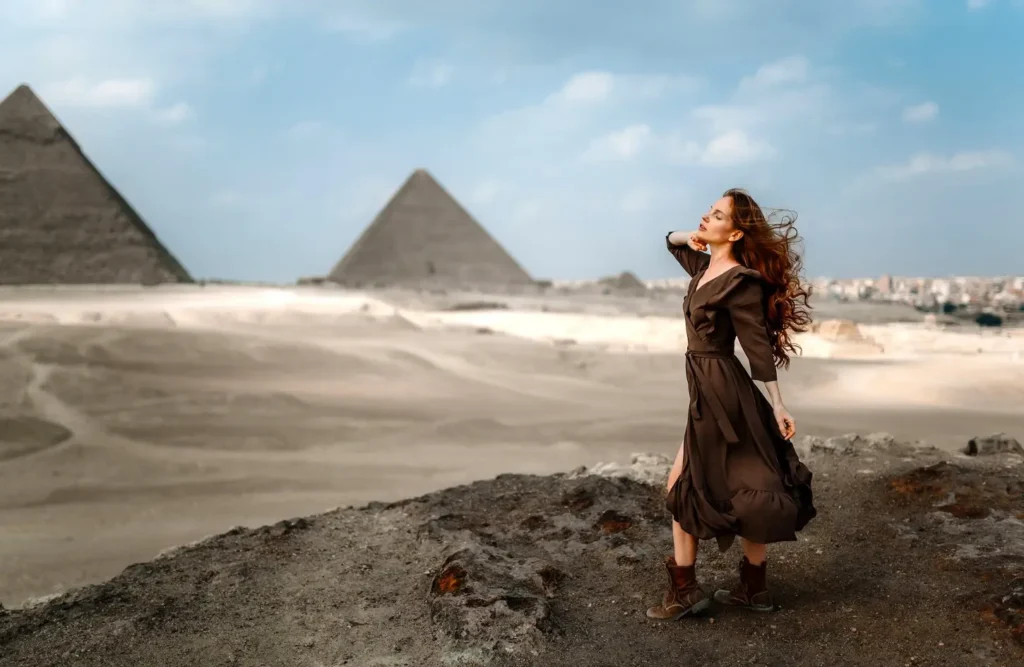
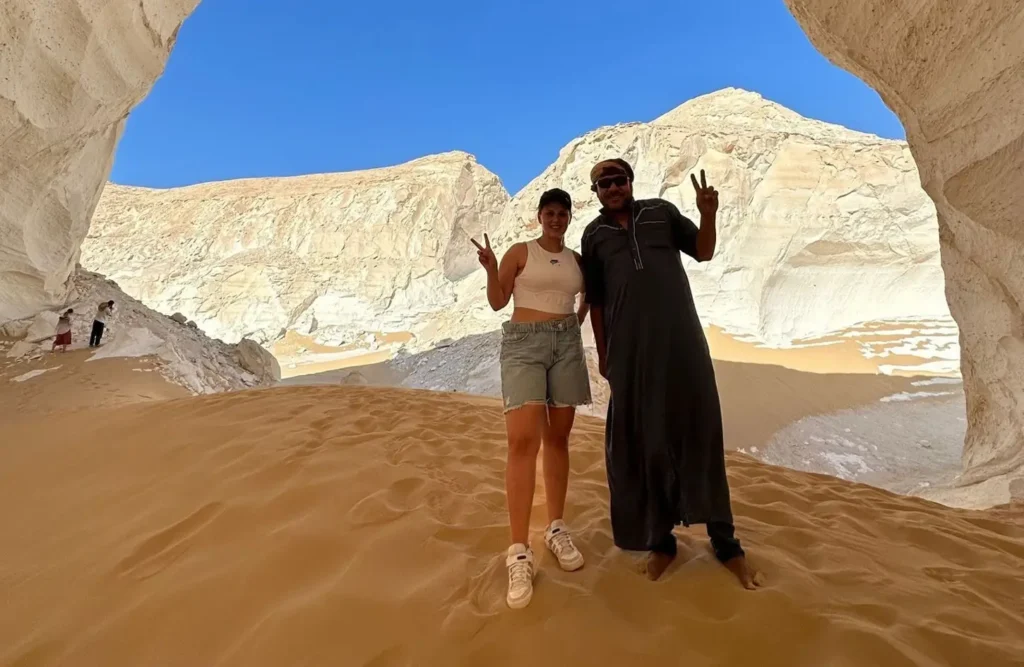
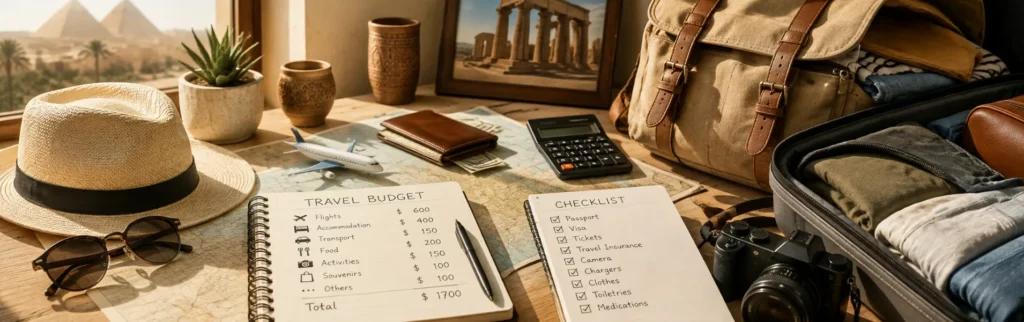
The four cultural rules that cover 90% of situations: dress modestly (knees + shoulders covered outside beach resorts), ask before photographing people, tip generously in small US dollar bills, and use your right hand for eating, gifting or handshakes. Egyptians are warm and forgiving of visitor mistakes — but making the effort is noticed and appreciated.
- Dress: knees + shoulders covered in cities/temples (bikini at beach resorts is fine)
- Right hand: for eating, handshakes, exchanging money
- Photography: ask before photographing people; site tickets often exclude interior photos
- Tipping: small US dollar bills, always
- Mosques: remove shoes, women cover hair (scarf loaned at door)
- Ramadan: don’t eat, drink or smoke in public during daylight hours
1–5 · Dress code
1. Cover knees and shoulders in cities and at religious sites. Shorts (knee-length) work for men; women are better in loose trousers or long skirts. At beach resorts, standard swimwear is fine.
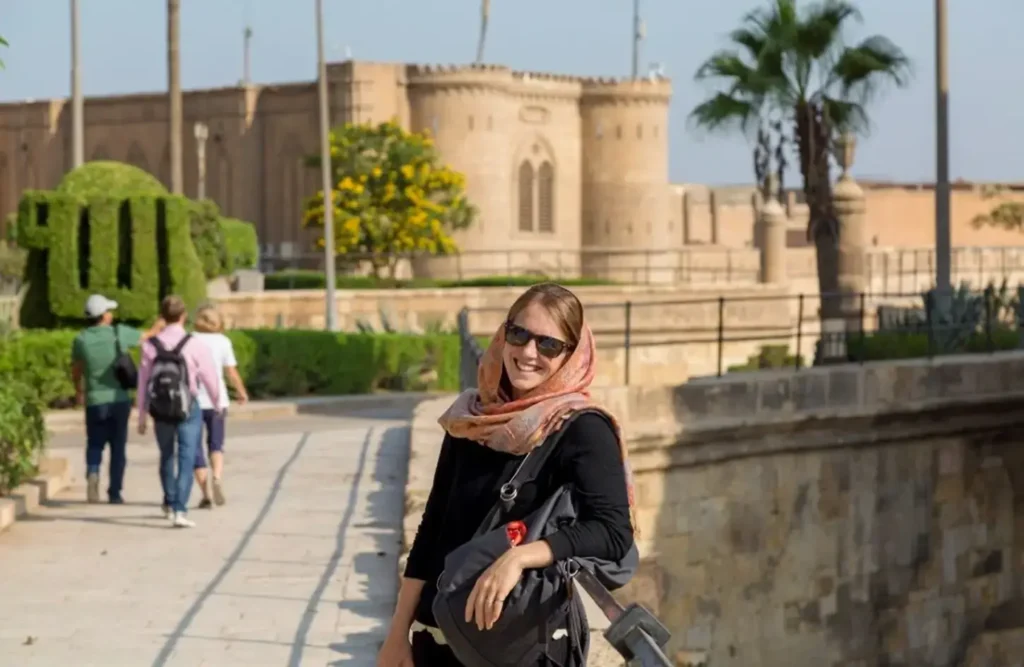
2. Bring a scarf or shawl. One accessory covers you for mosque visits, unexpected church stops, or a cooler-than-expected evening.
3. Smart-casual is a compliment. Egyptians dress well; scruffy backpacker style reads as disrespectful to the setting. Clean clothes, tidy hair.
4. At the beach, standard rules apply. Hurghada and Sharm El Sheikh are international resort towns; bikini on the beach and around the pool is normal. Cover up when walking through hotel lobbies or into town.
5. Sunglasses off when speaking to someone. Removing them for a conversation is a small courtesy noted everywhere in the region.
6–10 · Greetings and interaction
6. A handshake is standard — but men should wait for a woman to extend her hand first (some conservative women prefer not to shake hands with men).
7. Learn three words: Salaam alaikum (peace be with you), shukran (thank you), la shukran (no thank you). Using them opens every door.
8. Small talk before business. In shops, a “how are you? Is your family well?” precedes any transaction. Rushing to the point reads as rude.
9. Right hand only for eating, giving or receiving. The left hand is considered unclean in traditional Islamic culture.
10. “No” is often “not now.” A firm but polite “la shukran” is more effective than an aggressive brush-off with persistent vendors.

11–15 · Temples and mosques
11. Remove shoes before entering any mosque. They’ll usually have a shoe rack; some prefer you carry your shoes in a plastic bag.
12. Women cover their hair inside mosques. A scarf you drape at the door is enough; larger mosques lend you one.
13. Don’t enter during the five daily prayers. Wait 15 minutes.
14. At ancient temples, photography is generally fine but flash is banned inside tombs (it damages the 3,000-year-old pigment).
15. Photo permits for site interiors — the Valley of the Kings, some tombs — cost extra and are sold at the ticket booth. Your guide handles this.
16–20 · Money, tipping, bargaining
16. Bring US dollars in small bills ($1, $5, $10) — tipping in dollars is welcomed and often preferred over local currency.
17. Tip everyone: the porter (~$1 per bag), housekeeping ($2–3/day), waiters (10% if not on the bill), your guide and driver (see our tipping guide).
18. Bargain at bazaars, not at hotels/restaurants. In Khan El-Khalili, the first price is 3–5× what you should pay. Halve, counter, meet in the middle.
19. Never take the first taxi offer. Uber and Careem work in Cairo — use them for airport transfers unless pre-booked.
20. Change money only at banks or your hotel. Street exchangers with “better rates” are almost always scams.
21–25 · Ramadan and religious sensitivity
21. During Ramadan daylight hours, don’t eat, drink, chew gum or smoke in public. Doing so in front of fasting locals is genuinely disrespectful. Hotels and cruise ships serve normally throughout the day.
22. Iftar (breaking fast at sunset) is a beautiful time to be out. Restaurants are packed; the atmosphere is festive.
23. Don’t discuss politics, religion or the government with strangers or hotel staff. Not because it’s dangerous — because it’s tiresome and unproductive.
24. Public displays of affection between couples should be limited to holding hands. Kissing in public is uncommon and draws stares.
25. Say yes to tea. A shopkeeper or driver offering tea is not obliging you to buy — it’s hospitality. Accept, chat, and leave gracefully if you don’t want to buy anything.
Frequently asked questions
Do I need to learn Arabic?
No — English works at every tourism-facing business (hotels, restaurants, guides, shops in the bazaars). Learning three or four polite words (thank you, hello, no) goes a very long way in warmth received.
Is alcohol banned in Egypt?
No — alcohol is served at every 4-star+ hotel, on every Nile cruise, and at licensed restaurants throughout the tourist areas. It’s not sold in supermarkets and public drinking is not acceptable.
Can I bring pork or non-halal food into Egypt?
Personal quantities in your luggage are fine. Note that pork is not sold anywhere in Egypt except a few dedicated Christian butchers in Cairo.
Is it OK for a woman to travel alone in Egypt?
Yes — millions of solo female travelers visit Egypt every year. Dress conservatively, use pre-arranged transport, and don’t be shy about a firm “la shukran.” See our safety guide.
What if I make a cultural mistake?
You’ll be forgiven. Egyptians are famously warm and generous with visitors, and everyone understands that first-time cultural context takes learning. Making the effort is what matters.
Ready to plan the real thing?
Every itinerary we run is private and every departure is confirmed for your exact dates. Tell us what you have in mind and we’ll come back with a tailored proposal — usually within a few hours (Cairo time).