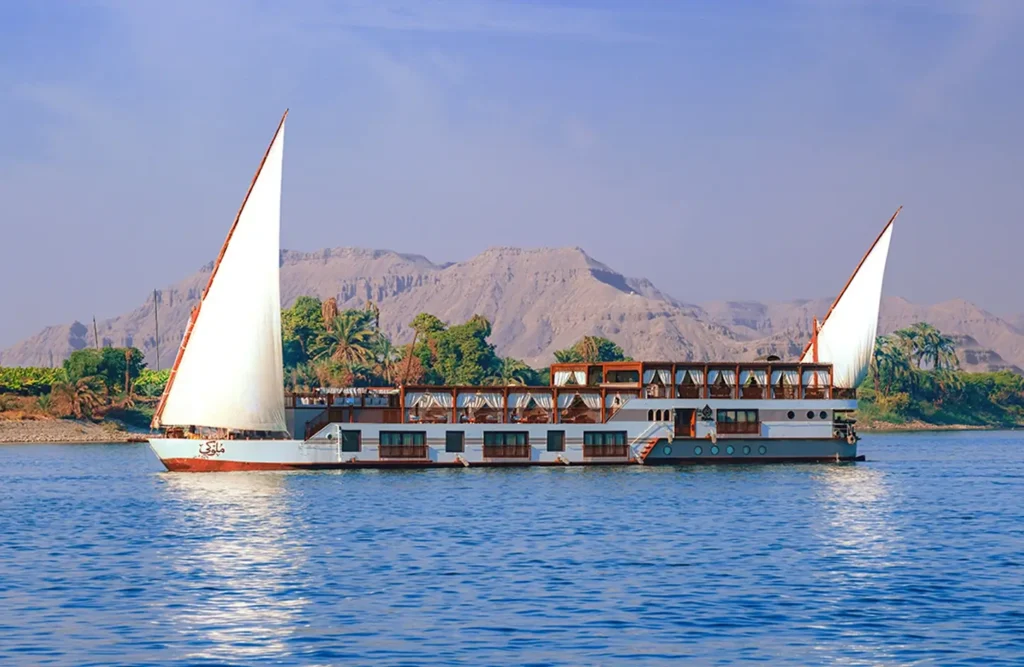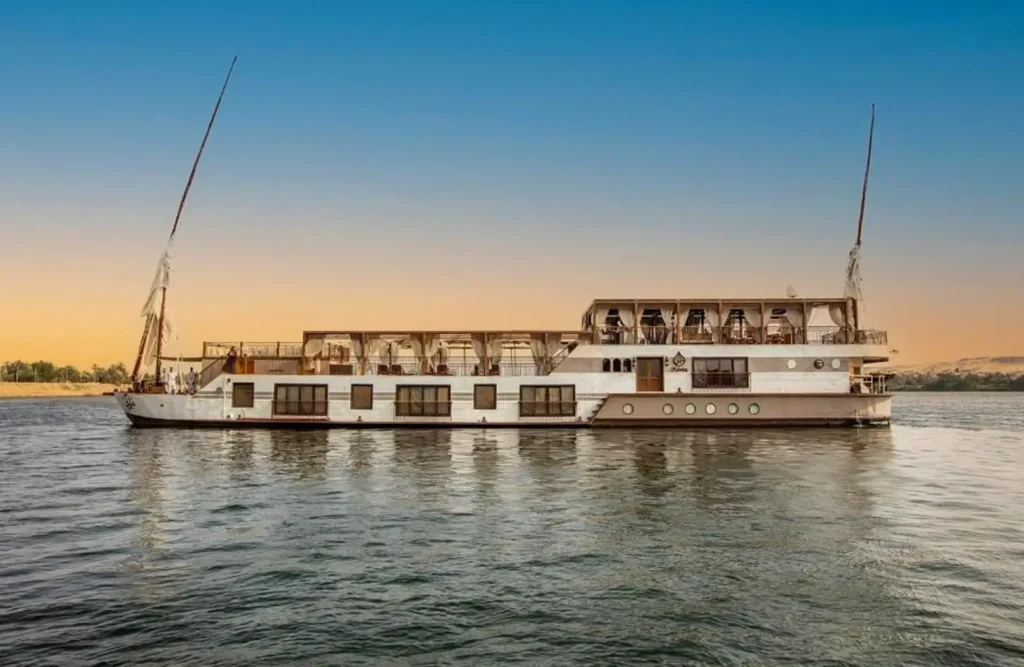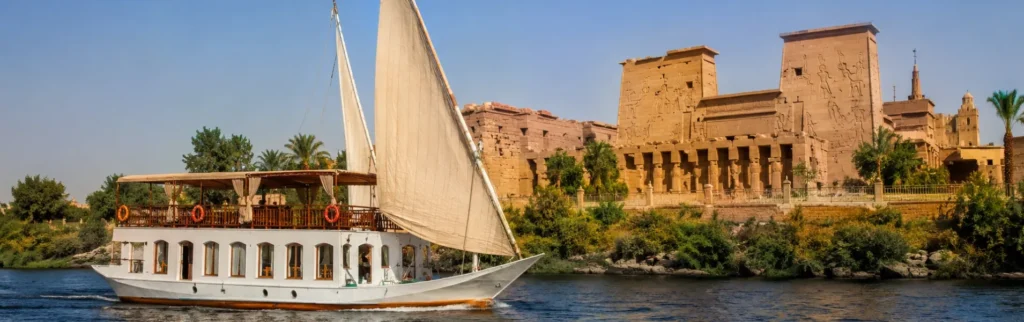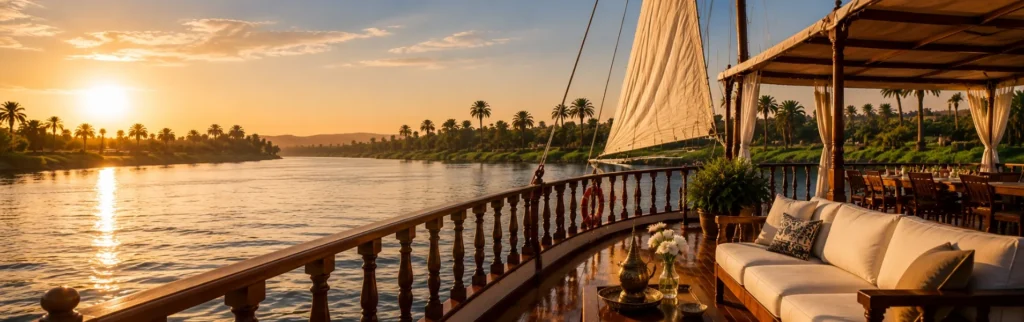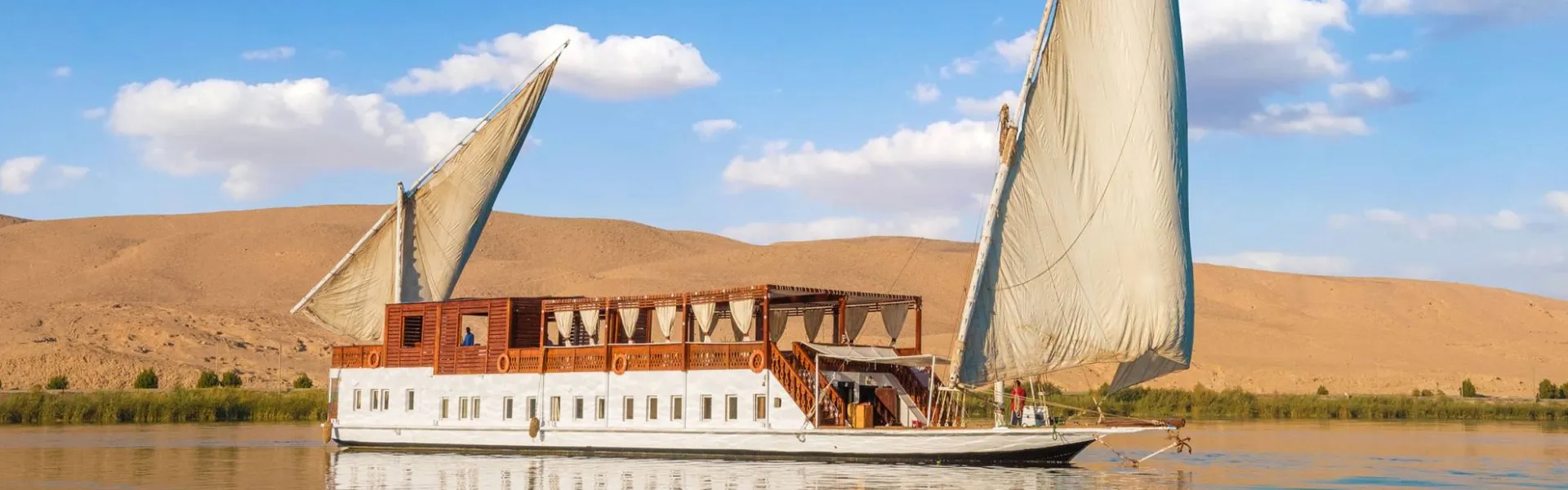
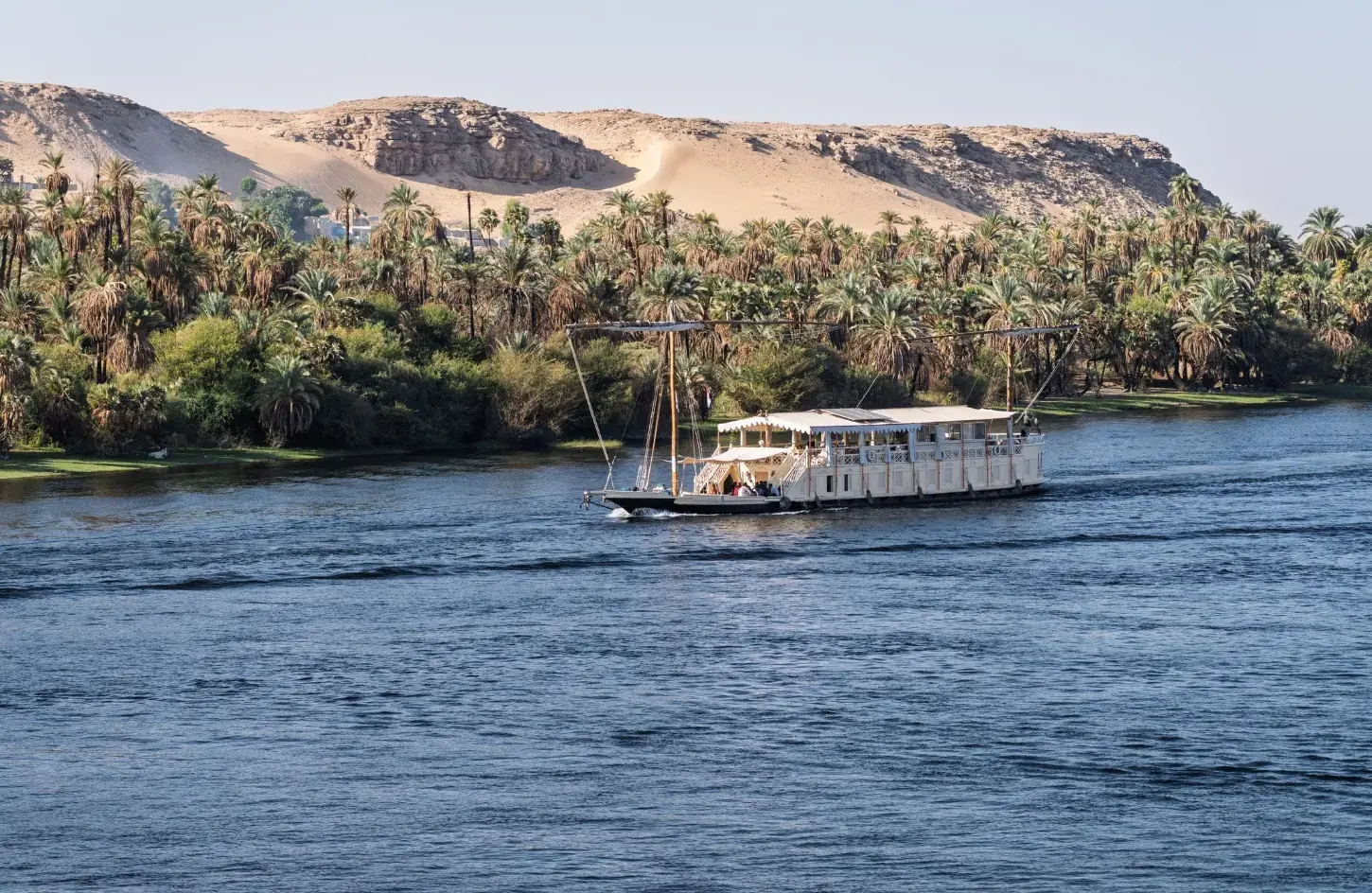
A dahabiya is a hand-built traditional Nile sailing boat with two lateen sails, 8 to 12 cabins, and no engine (a small tug is used to maneuver in and out of moorings). It sails the quiet Esna-to-Aswan corridor at the pace of the wind, mooring nightly at small villages and sites the 60-cabin cruise ships can’t reach — El Kab, Gebel el-Silsila, quiet stretches between temples. The most intimate way to see the Nile.
- Type: hand-built wooden two-masted sailing boat
- Size: 8–12 cabins, 10–16 guests total
- Propulsion: sails + a small tug boat for maneuvering
- Route: Esna → Aswan (4 nights) or Luxor → Aswan (7 nights)
- Facilities: sun deck, dining room, small library — no pool
- Best for: honeymoons, privacy-seeking travelers, boutique fans
What a dahabiya actually is
Dahabiyas (from the Arabic word for “golden,” referring to the gilded boats of Egyptian nobility) are the traditional Nile sailing craft — two masts, lateen sails, a shallow draft that lets them moor in places large ships can’t. Modern tourist dahabiyas are hand-built in dedicated boatyards in Esna and Cairo using the same techniques used for centuries, then fitted out with 5–8 en-suite cabins, a dining room, a shaded sun deck and a small library.
They carry between 10 and 16 guests total, which changes the entire dynamic of a Nile trip. You know everyone on board by dinner on Day 1.
How they actually sail
Modern dahabiyas rely on the same wind that carried felucca traders up and down the river for millennia. Two lateen sails (triangular, on angled yards) can be adjusted for the prevailing north wind — which typically pushes boats south naturally, then they tack back north with careful sailing or the assistance of a small motorized tug. In practice, most dahabiya trips run north-to-south with the wind and use the tug boat for the return leg or for maneuvering in and out of specific moorings.
The boat moves at 5–8 km/h in a good wind — much slower than a cruise ship’s 15+ km/h. This is the point, not the drawback.
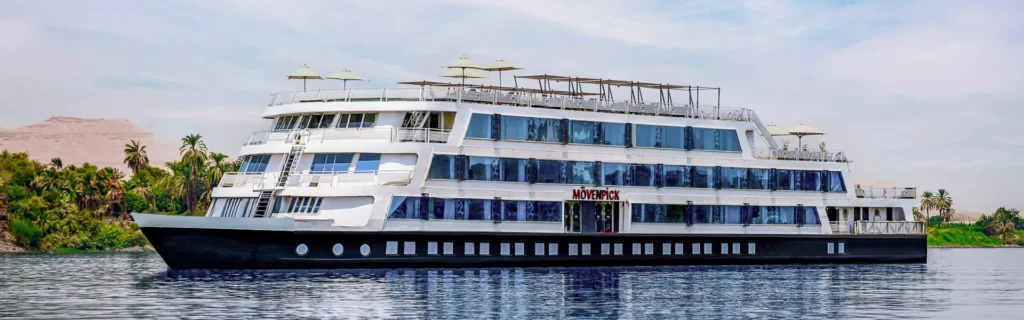
What differs from a Nile cruise ship
| Dahabiya | Nile cruise ship | |
|---|---|---|
| Cabins | 5–8 | 60–75 |
| Total guests | 10–16 | 120–150 |
| Propulsion | Sail + tug | Engine |
| Standard route | Esna → Aswan | Luxor ↔ Aswan |
| Moorings | Small villages + sites | Standard temple docks only |
| Pool | No | Yes |
| Gym / Spa | No | On luxury tier |
| Air-conditioning | Cabins only | Full ship |
| Entertainment | Musicians occasionally | Nightly programs |
| Pace | Very slow | Moderate |
| Price (per person) | Higher per night | Lower per night |
Who a dahabiya suits
- Honeymoons and milestone anniversaries — the intimacy and quiet suit the occasion
- Repeat Nile visitors — you’ve done the cruise ship, want a different angle
- Small groups (family, friends) chartering the whole boat
- Privacy-seeking travelers — 12 people vs 120 is a real difference
- Slow-travel enthusiasts who value the sail itself, not just the temples
Who it doesn’t suit
- Families with young children — no pool, no entertainment, quiet is the point
- Summer travelers — no pool + limited public AC in a 40°C+ climate
- Anyone with mobility limitations — dahabiyas have narrow companionways and steep sun-deck stairs
- First-time Egypt visitors on a tight budget — a cruise ship is significantly cheaper per person
The special moorings you get
The dahabiya’s size advantage: it moors in places big ships physically can’t or don’t. Standard extras on a 4-night Esna-Aswan sailing:
- El Kab — a rural riverside village with rock-cut tombs from the New Kingdom
- Gebel el-Silsila — ancient sandstone quarries that supplied stone for Karnak; the water’s edge is lined with stelae
- Small village stops for coffee, an evening felucca-repair yard visit, or an impromptu Nubian dinner
- Off-schedule mooring to watch a sunset at a spot the crew has picked based on the weather
Cabin booking vs full charter
Two ways to travel on a dahabiya. Cabin booking: you take one cabin, share the boat with other travelers (typically 6–8 unrelated pairs on a full sailing). Standard for couples and honeymoons. Full-boat charter: you take the whole boat for your group — a family, group of friends, or milestone celebration. The per-person rate is higher than for a cabin on a shared departure. See our cabin vs full charter guide.
Frequently asked questions
How is a dahabiya different from a felucca?
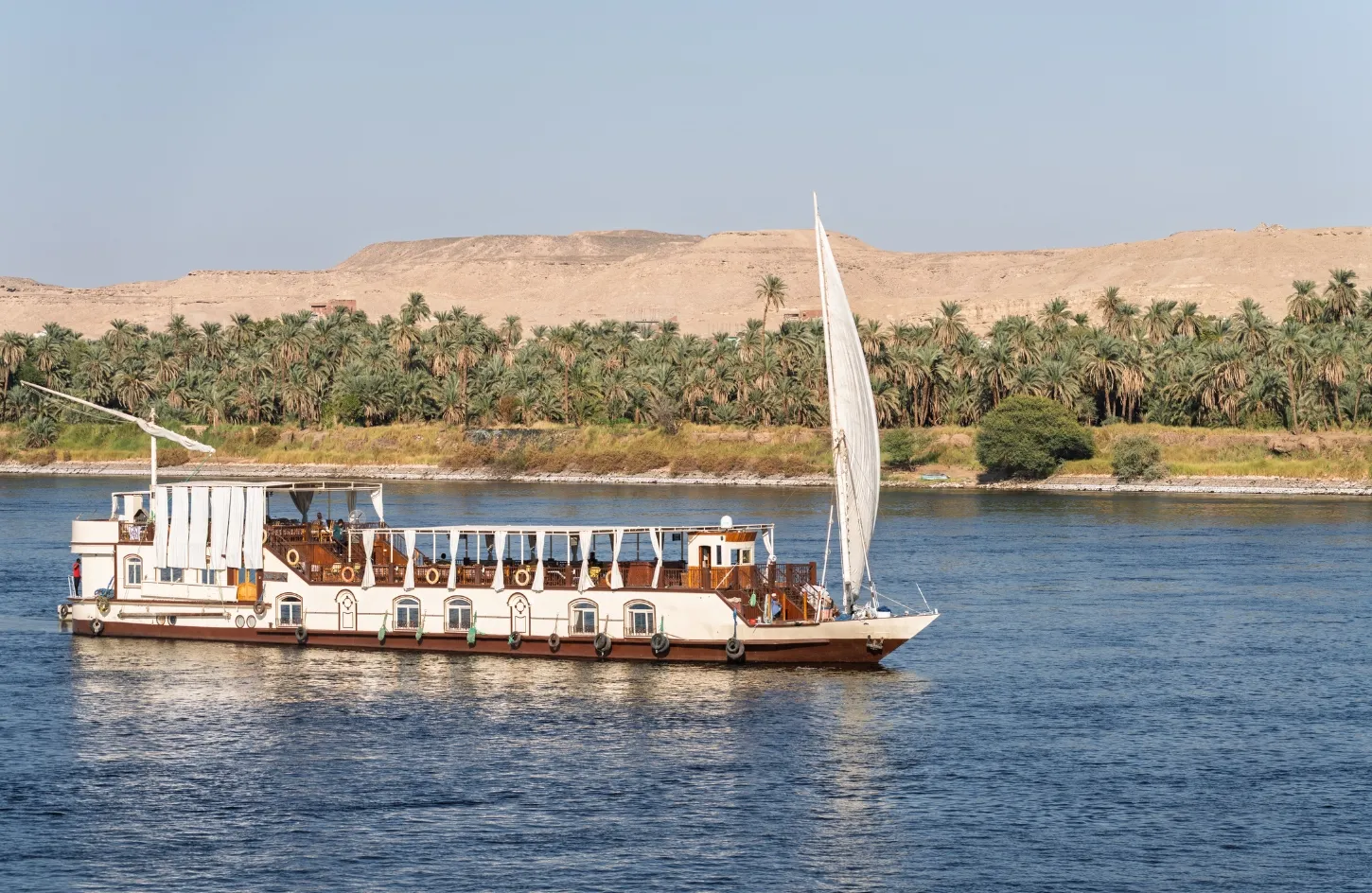
Feluccas are single-mast day-sail boats — you sail for a few hours at sunset, no sleeping accommodations. Dahabiyas are full multi-day boats with cabins, meals and a proper itinerary. The felucca is a 2-hour experience; the dahabiya is a 4-7 night trip.
Do dahabiyas have modern bathrooms?
Yes — every cabin on a modern tourist dahabiya has an en-suite bathroom with shower, toilet, sink and hot water. Cabin air conditioning is standard. The engineering is old; the plumbing isn’t.
What if there’s no wind?
The small motorized tug boat handles those days. It’s attached alongside the dahabiya and gently pushes it through wind-less stretches. The point is you can still make the schedule reliably.
Is the ride bumpy?
No — the Nile is not a rough river. Dahabiya motion is very gentle, more so than a cruise ship (no engine vibration). Motion sickness is extremely rare.
Are meals catered?
Yes — full board with a small kitchen and dedicated chef. The food is often better on dahabiyas than cruise ships (smaller kitchen = more attention to each plate). Menus adapt to guests’ preferences daily.
Ready to start planning?
Every itinerary we run is private and every departure is confirmed for your exact dates. Tell us what you have in mind and we’ll come back with a tailored proposal — usually within a few hours (Cairo time).