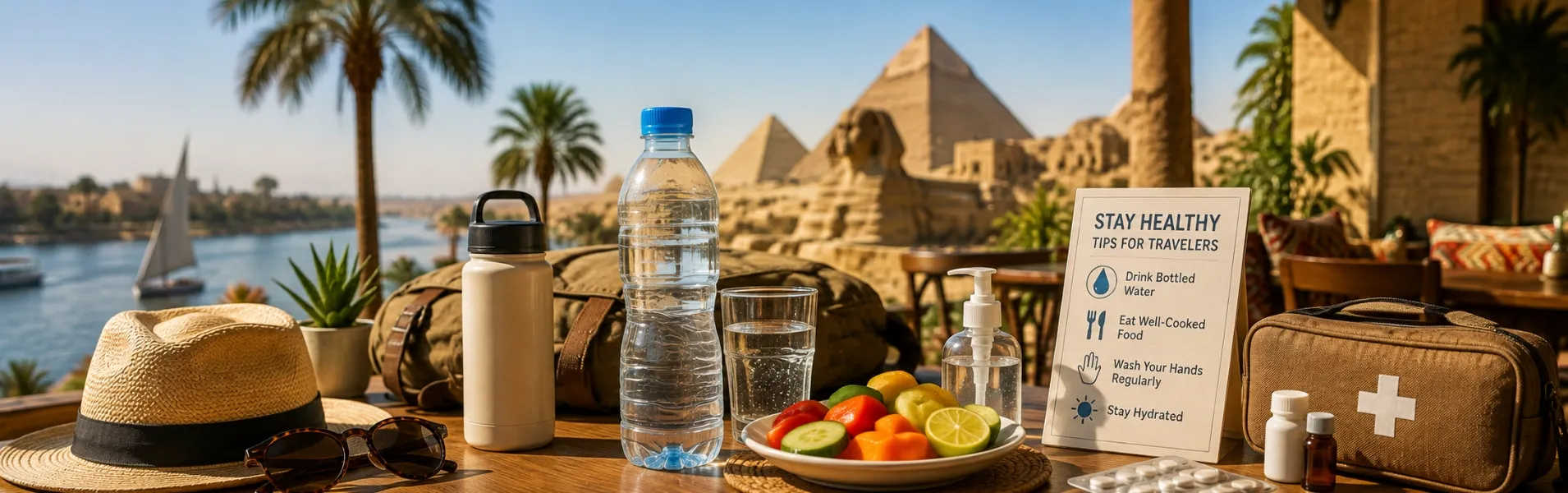
Tap water in Egypt is not recommended for visitors to drink, even in nice hotels. Egyptian tap water is chlorinated and safe for locals, but the mineral content and microbes are different enough from Western water to cause stomach upset. Stick to sealed bottled water (verify the seal) for drinking and brushing teeth. Use tap water for showering safely.
- Drink only: sealed bottled water (verify the seal each time)
- Brush teeth: with bottled water
- Shower: tap water is fine — don’t swallow it
- Ice: at 4-star+ hotels and cruise ships yes; at street vendors no
- Salads/raw veg: at 4-star+ restaurants yes; street food no
- If you get sick: rehydration salts + rest; see doctor if not resolving in 24h
The water itself
Egyptian municipal tap water is treated and chlorinated to a standard that’s safe for locals — Egyptians drink it daily without issue. What causes traveler stomach isn’t contamination in the Cairo/Luxor sense; it’s that your gut biome isn’t used to the local microbial profile. Even completely “clean” water with a different mineral content and slightly different microbes can trigger the classic 24–48 hour traveler’s stomach.
The practical solution is simple: drink sealed bottled water only. It’s widely available, cheap ($0.30–0.50 per bottle), and every hotel and cruise ship provides several bottles per person per day included.
What’s safe to consume
| Item | 4-star+ hotel / cruise | Local restaurant | Street |
|---|---|---|---|
| Sealed bottled water | ✓ | ✓ | ✓ (verify seal) |
| Tap water | ✗ | ✗ | ✗ |
| Ice in drinks | ✓ (made from filtered) | Ask | ✗ |
| Fresh juice | ✓ | ✓ | ✗ |
| Salads / raw vegetables | ✓ | Ask | ✗ |
| Peeled fruit | ✓ | ✓ | ✓ if you peel it |
| Cooked hot food | ✓ | ✓ | ✓ if it’s hot |
| Shellfish | Only at Red Sea coastal restaurants | Cautious | ✗ |
Brushing teeth and showering
Use bottled water to brush teeth — a small habit that eliminates a common infection route. Showering with tap water is safe as long as you don’t deliberately drink it. A closed-mouth rinse in the shower is fine.
Food, more generally
Every 4-star+ hotel and cruise ship maintains hygiene standards essentially indistinguishable from a European hotel. Their kitchens use filtered water for washing produce, their ice comes from filtered water, and their staff are trained on visitor stomach sensitivities. You can eat freely.
The risks concentrate at three places: street stalls (no way to know their water/hygiene standard), very cheap local restaurants in non-tourist areas, and uncooked shellfish anywhere except Red Sea coastal restaurants that source directly.

If you do get sick
Traveler’s stomach upset in Egypt is common and almost always mild — 24–48 hours of discomfort, self-limiting. What to do:
- Rehydrate aggressively — bottled water + oral rehydration salts (a strip of Dioralyte or Pedialyte from home is the single best thing you can pack)
- Rest — a lost day is better than pushing through and extending it to three
- Bland food only — plain rice, bread, boiled potato, banana
- Avoid dairy and coffee until you’re fully recovered
- If symptoms include high fever, blood in stool, or don’t resolve in 48 hours — see a doctor. Every 4-star+ hotel and every cruise ship has a doctor on call.
The Egyptian pharmacy
Egyptian pharmacies are excellent and staffed by trained pharmacists (who mostly speak English). Common traveler medications are available over the counter and cheap — no prescription needed for antidiarrheal, painkillers, oral rehydration salts, standard antibiotics. If you’re on a Vista tour, your guide will point you to a reliable pharmacy in whatever city you’re in.
Prevention checklist
- Carry hand sanitizer; use it before every meal
- Wash hands after handling money (Egyptian banknotes are handled a lot)
- Insulated water bottle you refill at the hotel/cruise (not from taps — from their filtered dispensers)
- Rehydration salt sachets in your day bag
- Bland-food emergency kit: a couple of energy bars
Frequently asked questions
Can I drink from the water dispenser at my hotel?
Yes — 4-star+ hotels have filtered dispensers that are safe. Cruise ships too. This is where you refill your insulated bottle.
What about hot drinks — tea, coffee?
Fine everywhere. Boiling water kills anything that would cause stomach upset. Tea and Turkish coffee are safe from any source.
Is fresh sugarcane juice safe?
At a busy street stall using clean-looking equipment, generally yes — but this is exactly the category where you take a small risk. First-time visitors should stick to bottled or restaurant-served drinks.
Should I be worried about food poisoning at Egyptian restaurants?
No — the standard restaurants Vista uses, and any 4-star+ hotel, maintain hygiene standards fully on par with what you’d expect in Europe. The issue is mineral/microbe difference in water, not contamination.
What vaccines do I need for Egypt?
Standard routine set (measles, tetanus, etc.) plus current recommendations from your country. Hepatitis A and Typhoid are commonly recommended for Egypt travel. Yellow fever is not required unless you’re arriving from a yellow-fever country. Confirm with your travel doctor before departure.
Ready to plan the real thing?
Every itinerary we run is private and every departure is confirmed for your exact dates. Tell us what you have in mind and we’ll come back with a tailored proposal — usually within a few hours (Cairo time).